We can do a once off treatments to eliminate mole crickets, termites and diseases like fairy rings, brown patch, mushrooms, dollar spots, anthracnose, rust, pythium blight etc.
In extreme cases we can remove thatch, do spike rolling or even plant new grass. We can also spray grass if you cannot wait for our products and nature to do its job.
Our products is not available for sale to the public. Our products is only available to registered Lawn-Pro lawn specialists.
I ensure that my teams do the treatments according to strict lawnpro standards.
If weeds on grass is left untreated it will eventually take over and you will have only weeds left. Contact us to eliminate weeds before it is too late.
You can also have a green healthy lawn even during the winter months.
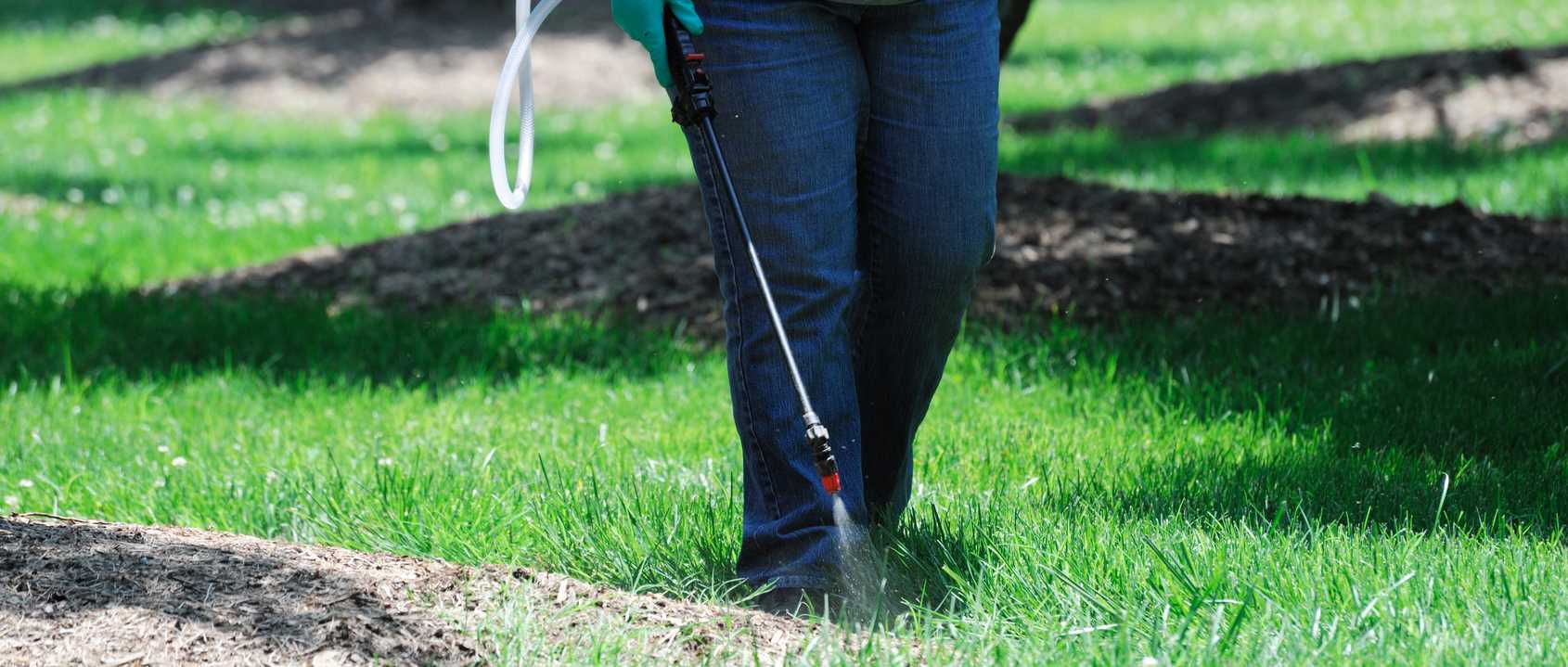

We at Lawn Pro specialize in lawn treatment.
We are qualified pest controllers registered with the department of agriculture.
Step 1: Place any small plastic container approximately 1,5 meters from the sprinkler you want to test.
Step 2: Start your sprinkler system and time how long it takes for the water to fill up to 25mm or 2,5 cm.
Step 3: This is how long you will need to run your sprinklers. You need to water your lawn at least twice a week preferably in the early morning.
You will only need to determine your sprinkler running time once.
Example: If you have determined your running time to be 15 minutes that will mean that you will set your sprinklers to run twice a week for 15 minutes at a time.

Brown patch is really a summer lawn disease that's caused by a fungus called Rhizoctonia. ... Then, lawn disease damage can become visible almost immediately. Once started, brown patch lawn disease spreads fast. Brown patch damage first appears as circular areas of brown and dead grass surrounded by a narrow, dark ring.

Dollar spots are a common fungal disease that tends to affect golf courses, but may also infect manicured home lawns. Unlike some fungal infections, dollar spots do not damage the roots or crowns of grass. They only grow on the blades/leaves of grass stalks.

Anthracnose is a common fungal infection that affects not only grass, but also trees and other foliage. It actually refers to a group of different fungi which all cause nearly identical symptoms, but grass is usually affected only by a single fungi, known as colletotrichum cereale.

Fairy rings are caused by a diverse family of soil-inhabiting fungi called basidiomycetes. They typically appear as dark green circles in the lawn ranging in size from a few inches to 200 feet or more in diameter.Often the disease will produce a thick fungal mat that prevents water from reaching the grass roots below.

Rust is a fungal disease that occurs on turf grasses when their growth is slowed. This usually happens in late summer or early fall, during periods of dry weather or when the grass is low on nitrogen. Lawn rust can weaken the vigor of the grass and open it to other diseases and turf problems.

Pythium blight, also known as grease spot, kills turf in small, roughly circular spots (2 to 6 inches) that tend to run together. Blackened leaf blades rapidly wither and turn reddish brown. Leaf blades tend to lie flat, stick together, and appear greasy. Roots may be brown and rotten.

Lawn Caterpillars. The tropical sod webworm is the most common caterpillar that attacks home lawns. These are stealth caterpillars because they hide during the day by curling up on the soil surface and come out at night to chew the grass. The caterpillar or larvae are gray-green in color and have many brown spots.

Typical lawn grubs, often called white grubs, are white, C-shaped beetle larvae about a half-inch in length. ... Lawn grubs have soft bodies with legs near the head. They feed on grassroots (and organic matter in the soil), causing sections of grass in the lawn to die.

Crickets are related to grasshoppers and have a similar body shape. While there are many species of crickets, most of them measure less than 1 inch long and are shiny black or brown. Some types of crickets have dark spots or bands on their bodies.

The Mole Cricket is a large insect that will typically reach 40-50mm in length during adulthood. Unlike typical crickets, it does not feature the elongated hind legs of most species. This pest burrows in soil and so its front legs are adapted to give it extra strength.

The termites in the grass probably belong to a grass-eating species, known as agriculture and desert termites. These termites live above the ground and up to 4 feet below the ground. They have white bodies, brown heads and no wings.

Ants (Family Formicidae) are social insects which build their nests in soil, wood or other suitable substrates. They occasionally become a problem in turf when they invade lawns, parks, golf courses, playgrounds, cemeteries and other turfgrass areas.

A very common broad leaf weed on lawns throughout South Africa.
Many people plant this as groundcover, but due to its vigorous growth it can become a problem on lawns.

An extremely common broad leaf weed on lawns throughout South Africa.
One of the most difficult weeds to control due to its massive root structure it produces as well as the small leaves it has.

This weed can be found in paved areas as well as in lawn.
Hand removal is almost impossible due to its capability to regrow from roots left behind.

Mainly found between grass on lawns.
Reproduces from tubers or nuts found at the end of rhizomes (underground roots).
It is recommended not to mow for at least 4 days prior to herbicide application to allow for as much leaf surface area as possible.

Very common on all lawns throughout South Africa.
When flowering, it can be easily recognized by the compact, tough flower on the end of a long stalk, containing 1000’s of seeds.
When treated, the leaves will appear to turn upside down. As the bottom of the leaves are lighter in colour, plants that are dying will almost have a silver shine to them.

A common bunch grass weed on lawns throughout South Africa.
Normally a problem during winter months, but will continue to grow throughout the year in damp shady areas.
Massive problem on some golf greens – it disrupts the playing surface levels.
As this is a cool season, annual weed, it is ideal to treat this weed during the cooler, winter months.

An indigenous segde normally found in areas with poor drainage.
There are many different species of Kyllinga across South Africa.
Easily identified as it looks similar to nutsedge, but with a small ball of seeds on top of a long stem.
This seed ball has 3 leaves on the sides.

This weed can be found in paved areas as well as in lawn.
Hand removal is almost impossible due to its capability to re-grow from roots left behind.
Purple to reddish colour leaves, with either a reddish or green stem.
If the stems are broken, a white fluid is exuded.

A clover that has three leaves connected to the main stem.
An inner white smoke ring can be seen on all the leaves.
Very unsightly when it is found in lawn, and can completely replace lawn in where they occur.
During flowering season, a white flower is produced.
Very common on the Cape Coastal areas, but can also be found in other provinces.

Here we are talking about all grass types that you may find growing in between paving.
Hand removal is almost impossible due to its capability of most warm season grasses to re-grow if all the roots are not removed. A task that is almost impossible!

Kobus: 083 456 4043
Email: info@lawndoctorsa.co.za
Skype: Lawndoctor SA
To arrange lawn analysis or schedule treatments please contact Liza: 081 009 6993
Email: lizam@lawndoctorsa.co.za
Monday - Friday 7:00am–7:00pm
Saturday 8:00am - 5:00pm
Sunday Closed
The advantage of an owner operated business is that you have one contact person. All Free Lawn Analysis and quotes are done by the owner to ensure you get the best advise and prices.